Ezhednevnik
A custom news platform for a Bulgarian media company featuring a Next.js frontend, headless CMS, and an automated AI drafting pipeline.
A sluggish WordPress site that failed to support the editorial team's publishing volume, lacking automation and a solid database.
A powerful publication engine with AI-assisted drafting. Source articles become polished drafts in minutes for editors to refine.
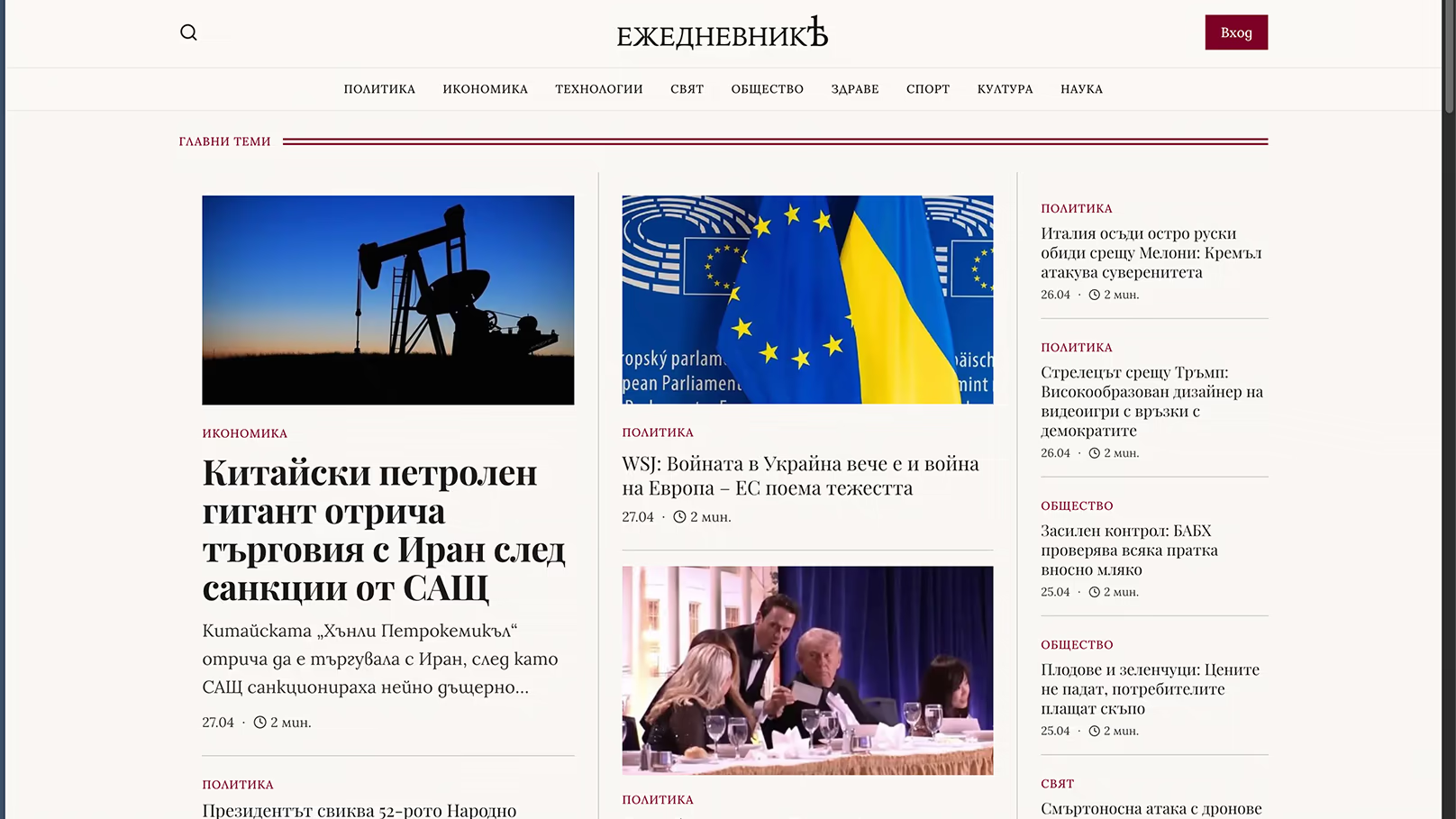
Ezhednevnik is one of the most complex builds we have shipped. The brief was to replace a slow WordPress publication with a real product. A Next.js application, a headless CMS the editor can run alone, and an automated pipeline that turns approved sources into draft articles in minutes.
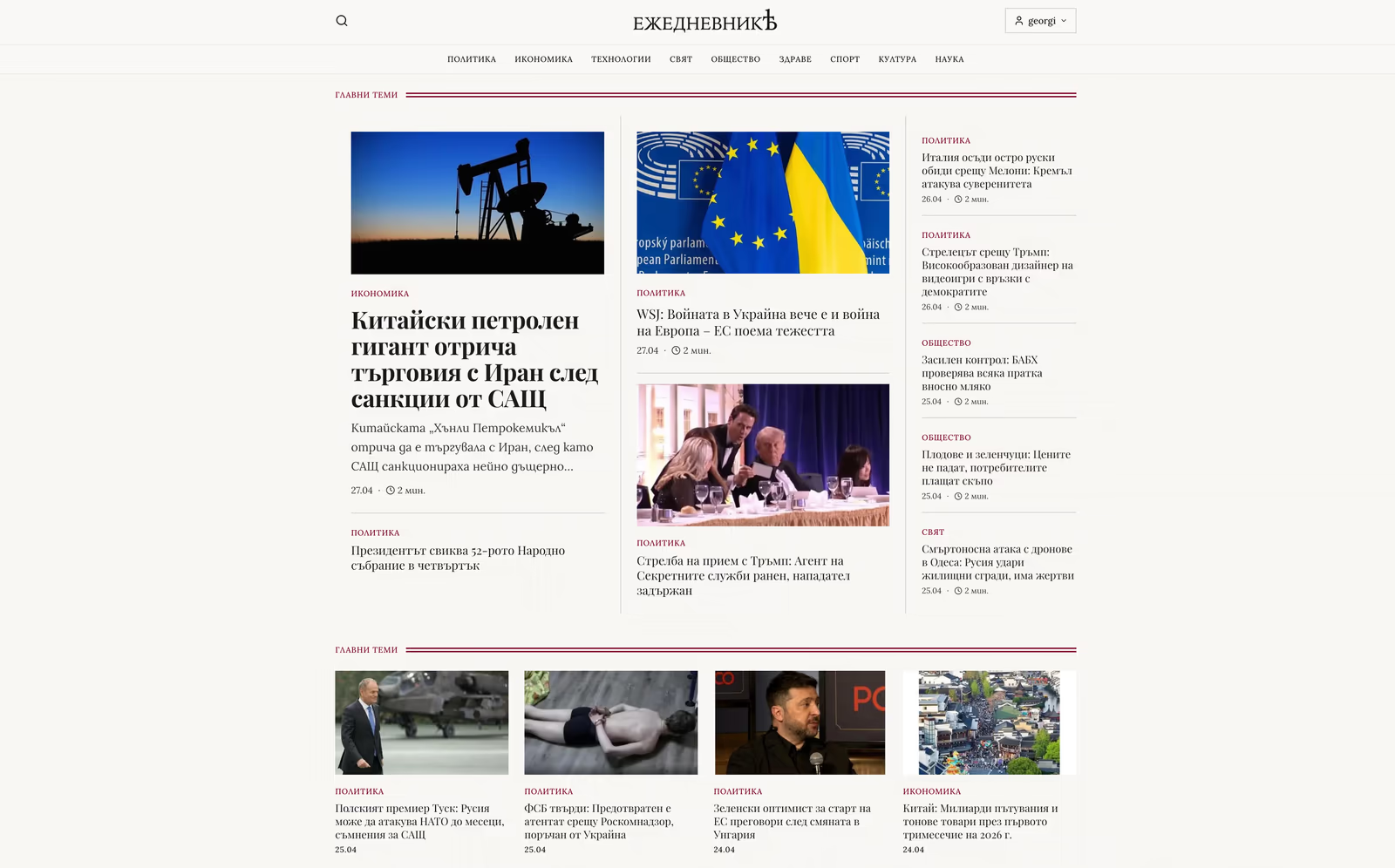
The reading experience borrows from traditional media. A three-column layout close in spirit to the Financial Times and the New York Times. Quiet, dense, made for actual reading rather than scrolling fatigue. Type sized for long-form, line lengths kept tight, no infinite scroll for its own sake.
A Supabase database holds every article, image, tag, and category. Tagging, search, related articles, RSS, and email all read from the same source. The schema is built to scale with publication volume. Adding a new section, a new column, or a new editorial taxonomy is configuration, not a rebuild. The automation pipeline runs on a virtual private server with n8n at the centre. Firecrawl handles scraping from the editor's approved sources. Gemini writes the rewrite and summarisation passes. Image generation runs alongside, producing draft visuals where stock or original art is unavailable.
The editor stays in charge throughout. They pick the source articles, send them to the queue, and ten minutes later see polished drafts inside the CMS. Text is editable, images replaceable, tags adjustable. The pipeline shortens drafting time without removing the editorial decision.
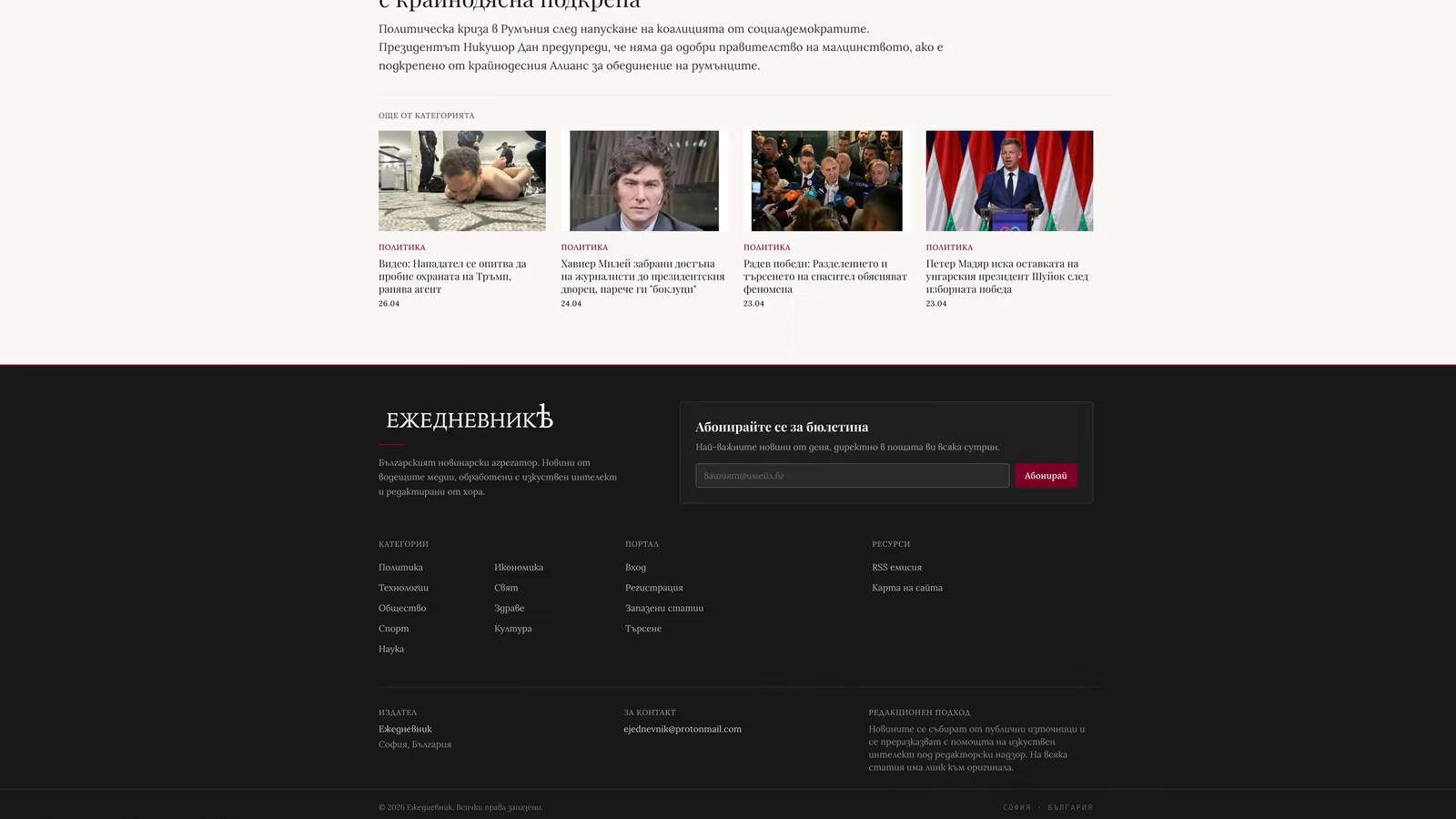
Around the core sit the smaller integrations. Telegram for alerts and approval flows. RSS for syndication. A scheduler for delayed publishing. Hooks for podcasts and email so the same content travels across channels without being rewritten by hand.
The previous WordPress site was slow, fragile, and unfit for the volume the company wanted to publish. Plugins fought each other. Backups were patchy. Performance suffered every time a new editorial section was added. The new system is fast, secure, and built to grow. The editor publishes more. The team spends less time fighting the tooling. The publication has moved meaningfully ahead of where it was, with the same headcount.
This is one of the projects we are proudest of. A real product, not a marketing site. A long pipeline of moving parts, all working together for a single editorial outcome. The kind of build that compounds, where every new feature uses the same database, the same automation backbone, the same editorial flow.
It is a substantial build for a substantial media company, and we are grateful to be the team that gets to keep working on it.